

NGM120
A potential treatment for pregnant women with Hyperemesis Gravidarum.
A Serious Disease Impacting Pregnant Women
Hyperemesis Gravidarum (HG), also known as extreme pregnancy sickness, is a serious disease characterized by intractable vomiting and nausea in pregnancy. Often minimized as ‘just’ morning sickness in the past, there is now growing awareness of the gravity of HG and its impact during pregnancy. In addition, a recent scientific discovery has identified genetic variants of the protein GDF15 as a root cause of HG.
NGM is advancing NGM120 as a potential treatment to address this root cause and potentially deliver an effective therapeutic solution for this debilitating condition. NGM120 is an investigational product and not an approved medicine.
Pregnant patients with HG in the US each year
ER visits due to HG in the US each year
of pregnant women experience severe nausea and vomiting in pregnancy
of pregnant women take antiemetics¹ in the 1st trimester to treat nausea and vomiting
The Underappreciated Severity and Impact of HG
Hyperemesis Gravidarum (HG), also known as extreme pregnancy sickness, is a serious disease characterized by intractable vomiting and nausea in pregnancy. Often minimized as ‘just’ morning sickness in the past, there is now growing awareness of the gravity of HG and its impact during pregnancy. In addition, a recent scientific discovery has identified genetic variants of the protein GDF15 as a root cause of HG.
NGM is advancing NGM120 as a potential treatment to address this root cause and potentially deliver an effective therapeutic solution for this debilitating condition. NGM120 is an investigational product and not an approved medicine.
01
2nd leading cause of hospitalization during pregnancy
02
Higher risk of HG in subsequent pregnancies
03
Current treatments are weak and ineffective
04
Higher rates of fetal loss and termination, preterm birth, low birth weight and suicidal ideation
Scientific Discovery in Understanding HG: Higher Levels of GDF15 Identified as a Risk Factor
Recent research published by an international team that included Marlena Fejzo, Ph.D., Clinical Assistant Professor of Population and Public Health Sciences in the Center for Genetic Epidemiology at the University of Southern California, and Sir Stephen O’Rahilly, M.D. FRS FMedSci, Professor of Clinical Biochemistry and Medicine at the University of Cambridge, found that GDF15 levels increase steadily in early pregnancy and are higher in women who experience nausea and vomiting in pregnancy and hyperemesis. The research uncovered that women with GDF15 genetic variants associated with lower levels of GDF15 in a non-pregnant state are predisposed to hyperemesis.
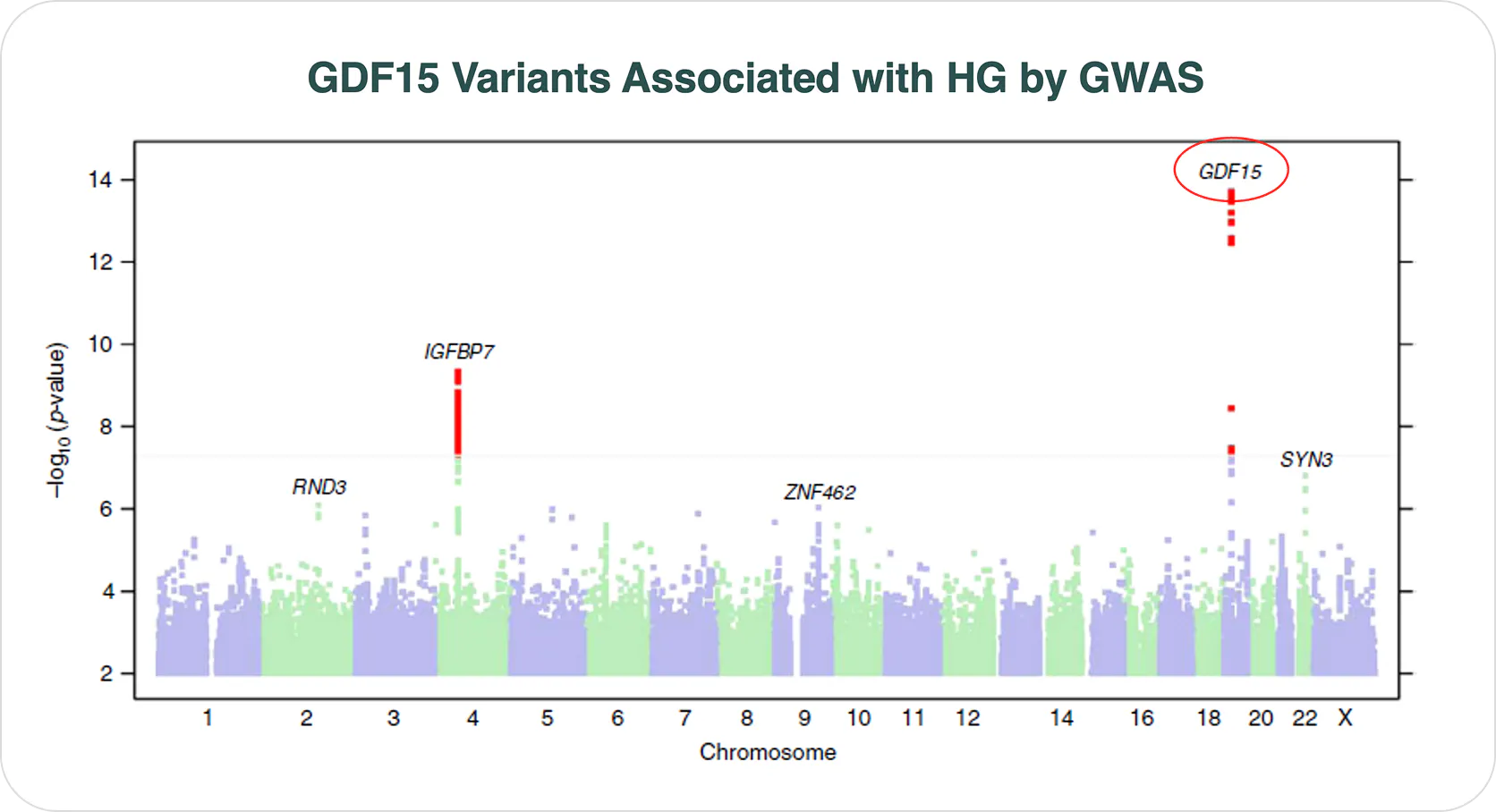
Source: Fejzo et al. Nature Communications 2018
NGM’s Opportunity to Treat HG: Targeting the root cause by blocking GDF15’s activity
With higher levels of GDF15 now identified as a risk factor for HG and severe nausea/vomiting during pregnancy, NGM is advancing NGM120 as a novel approach to potentially treat this condition. NGM120, a GFRAL antagonist antibody discovered by NGM, is designed to block GDF15 activity by preventing the interaction of GDF15 and GFRAL, the only cognate receptor of GDF15, and, as a result, may potentially have a therapeutic benefit for women suffering from HG.
NGM120 is being developed as a single injection. Antiemetics typically require multiple pills daily or intravenous administration.

Supportive Clinical Data and Development Status
NGM120 has been generally well-tolerated in over 200 participants treated in clinical trials to date.